Chatbot Builder vs a Custom AI Chatbot
The same decision, one row at a time. Use the row that matches the constraint you actually have.
| Focus | A custom AI chatbot | A chatbot builder |
|---|---|---|
| Knowledge it can use | A custom AI chatbotAny source you connect: databases, documents, CRM, and internal tools. | A chatbot builderThe pages, files, and integrations the builder supports. |
| Actions | A custom AI chatbotIt can create records, book, look up orders, or hand off, through your APIs. | A chatbot builderLimited to the actions the vendor has built. |
| Control | A custom AI chatbotYou choose the model, the prompts, the retention, and the hosting. | A chatbot builderThe vendor sets the model, the limits, and the data policy. |
| Scale | A custom AI chatbotOne platform can run many bots, brands, and teams with shared analytics. | A chatbot builderUsually priced and managed one bot or one seat at a time. |
| Best fit | A custom AI chatbotSupport, sales, or internal assistants that need your systems and your rules. | A chatbot builderA FAQ bot on a marketing site with a small, public knowledge base. |
Pick the side that matches the job.
Both options are legitimate. The mistake is buying one when the work has the shape of the other.
Build a custom chatbot when
- The bot has to answer from private data and respect who is asking.
- It has to act in your systems, not only answer questions.
- You run many sites, brands, or teams and want one place to manage them.
- Data retention, model choice, or hosting is a compliance requirement.
Use a chatbot builder when
- The knowledge is public and fits in a few pages or a FAQ.
- One website needs one assistant, and speed matters most.
- The builder already integrates with the tools you use.
- Nobody on your side needs to own a custom system after launch.
Three checks that settle the decision.
- 01
List the questions the bot must answer
Collect fifty real questions from support or sales. If a builder answers them well with your public pages, buy it. If the answers need private records, plan a custom build.
- 02
List the actions, not only the answers
A bot that only answers is a search feature. A bot that books, refunds, or updates a record needs your APIs, your permissions, and an approval rule.
- 03
Ask where conversation data goes
Conversations often contain customer details. Know which vendor stores them, for how long, and whether they are used for training.
When Corpvance is the wrong fit. A one-page marketing site, a staffed seat with no product to ship, or a request that is only design, only advertising, or one integration with no product around it.
Systems that match this kind of decision.
Each card links to the full case study. The reason is why that project belongs on this question.
StoneCanyon
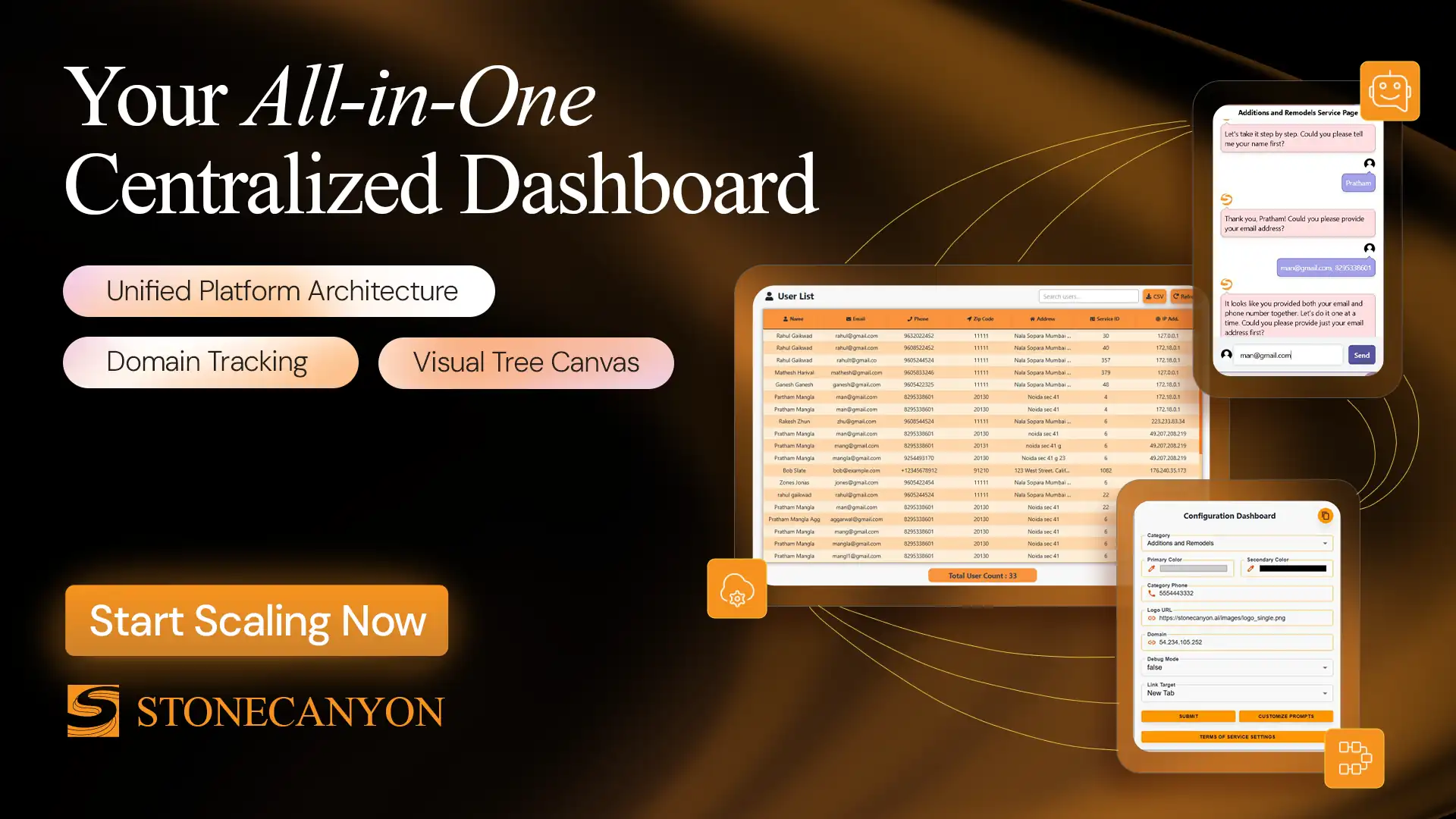
Centralized Chatbot Infrastructure
A central platform to create, deploy, manage, and analyze chatbots across many websites and teams, with custom prompts per business.

Transcendence
Premium Holographic Digital Human Platform
A conversational AI with tenant knowledge, retrieval, CRM, and analytics in one system, far past what a builder template covers.
Questions on this decision
The short version of the same choice, in the phrasing people use when they ask.
01When is a chatbot builder good enough?
When the bot answers public questions from a small set of pages, sits on one site, and does not need to act in your systems. In that case a builder is faster and cheaper than a custom build.
02What can a custom AI chatbot do that a builder cannot?
Answer from private data with per-user permissions, take actions through your APIs, use the model you choose, and run many bots from one platform with shared analytics. It also keeps conversation data under your policies.
03Can we start with a builder and move to a custom chatbot later?
Yes. Keep the list of real questions, the answers that worked, and the conversation logs. That material becomes the evaluation set for the custom build, so the move starts from evidence.