AI Agent vs Workflow Automation
The same decision, one row at a time. Use the row that matches the constraint you actually have.
| Focus | An AI agent | Rule-based workflow automation |
|---|---|---|
| Input it handles | An AI agentEmails, documents, chats, and requests written in natural language. | Rule-based workflow automationStructured fields, form submissions, and events with a known shape. |
| How it decides | An AI agentA model reads the case and chooses the next step and the tool. | Rule-based workflow automationConditions written in advance decide each branch. |
| Predictability | An AI agentNeeds evaluation, approvals, and limits, because the output can vary. | Rule-based workflow automationThe same input gives the same result every time. |
| Cost per run | An AI agentModel calls on every case, plus the review of edge cases. | Rule-based workflow automationUsually low, and fixed by the automation platform. |
| Best fit | An AI agentTriage, research, document review, and requests that need context from several systems. | Rule-based workflow automationNotifications, data sync, approvals with clear rules, and record creation. |
Pick the side that matches the job.
Both options are legitimate. The mistake is buying one when the work has the shape of the other.
Choose an AI agent when
- A person currently reads each case before anything else can happen.
- The input arrives as text, files, or conversation, not as clean fields.
- The right action depends on information spread across several systems.
- You can define what the agent may do alone and what needs a human approval.
Choose workflow automation when
- You can write every step and every branch on one page.
- The input is already structured when it arrives.
- An auditor needs the exact same behavior for the same input.
- The volume is high and the margin per case is small.
Three checks that settle the decision.
- 01
Draw the workflow and mark the judgment steps
Most of a process is usually fixed. Put AI only on the steps where a person reads and decides. The rest stays as plain automation.
- 02
Decide what the agent may never do alone
Payments, deletions, and messages to customers usually need an approval. Write those limits before the build, and log every tool call.
- 03
Measure against the current manual process
Count the cases per week, the time per case, and the error rate today. An agent is worth building when it moves those numbers, not when it looks impressive in a demo.
When Corpvance is the wrong fit. A one-page marketing site, a staffed seat with no product to ship, or a request that is only design, only advertising, or one integration with no product around it.
Systems that match this kind of decision.
Each card links to the full case study. The reason is why that project belongs on this question.

818 Digital
Conversational AI Operating System
One chat interface that searches Google Workspace, Egnyte, Salesforce, email, and calendars, and acts on the records it finds.
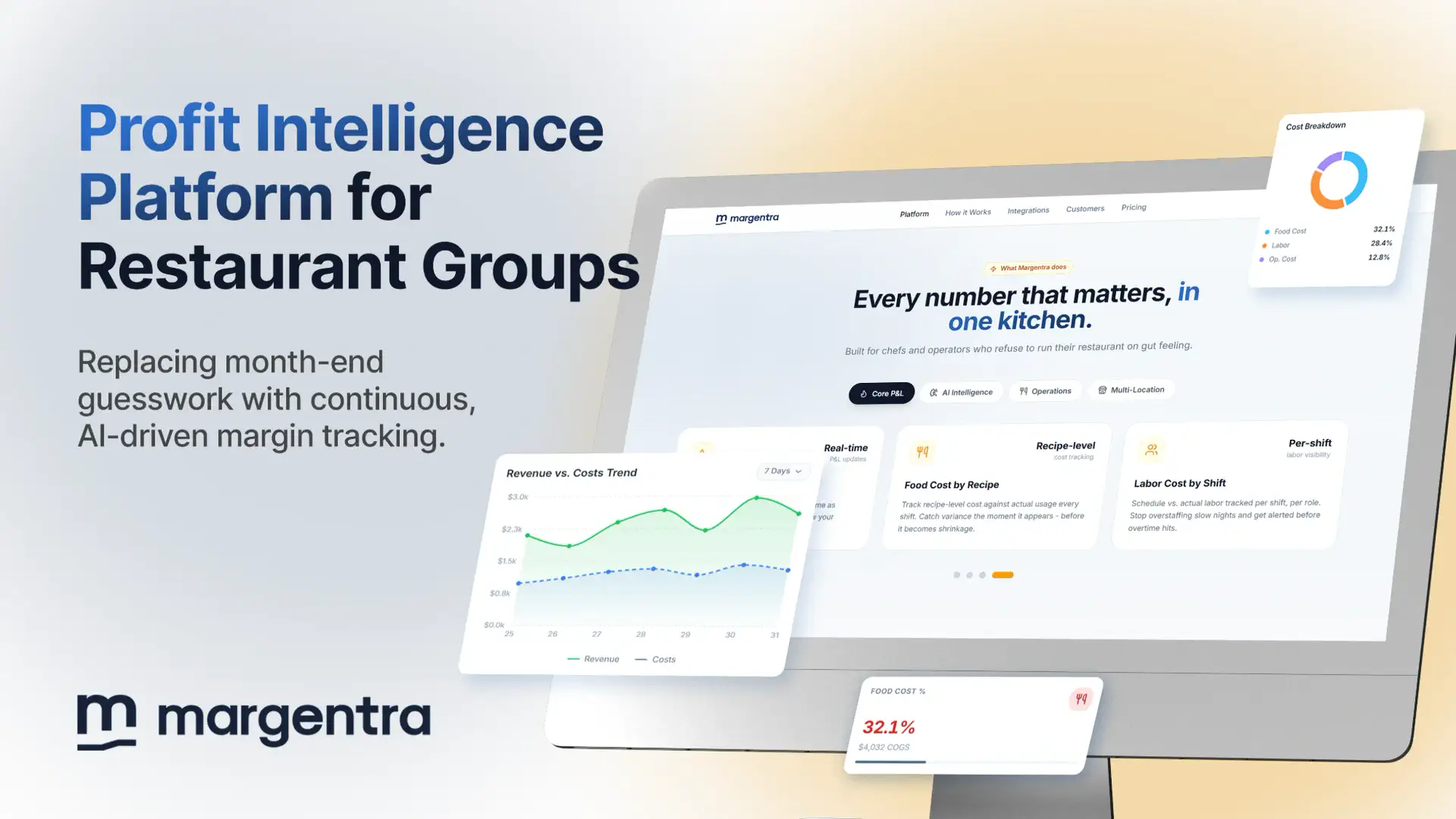
Margentra
Financial Operating System for Restaurants
AI-powered OCR reads invoices and receipts, then fixed rules write the fields into inventory and reporting.
Questions on this decision
The short version of the same choice, in the phrasing people use when they ask.
01What is the difference between an AI agent and an automation?
An automation follows steps written in advance. An AI agent uses a model to read the case and choose the next step, including which tool to call. Automation is predictable. An agent handles input that rules cannot describe, so it needs approvals, logs, and evaluation.
02Can an AI step sit inside an existing automation?
Yes, and it is often the best first build. The automation keeps the fixed path, and one AI step classifies, extracts, or drafts. Margentra uses that pattern: AI reads the invoice, and fixed logic writes the fields into inventory.
03How do we keep an AI agent safe in production?
Give each tool the narrowest permission it needs. Require a human approval for irreversible actions. Log every model call and tool call. Test the agent against real cases before release, and keep that test set running after release.